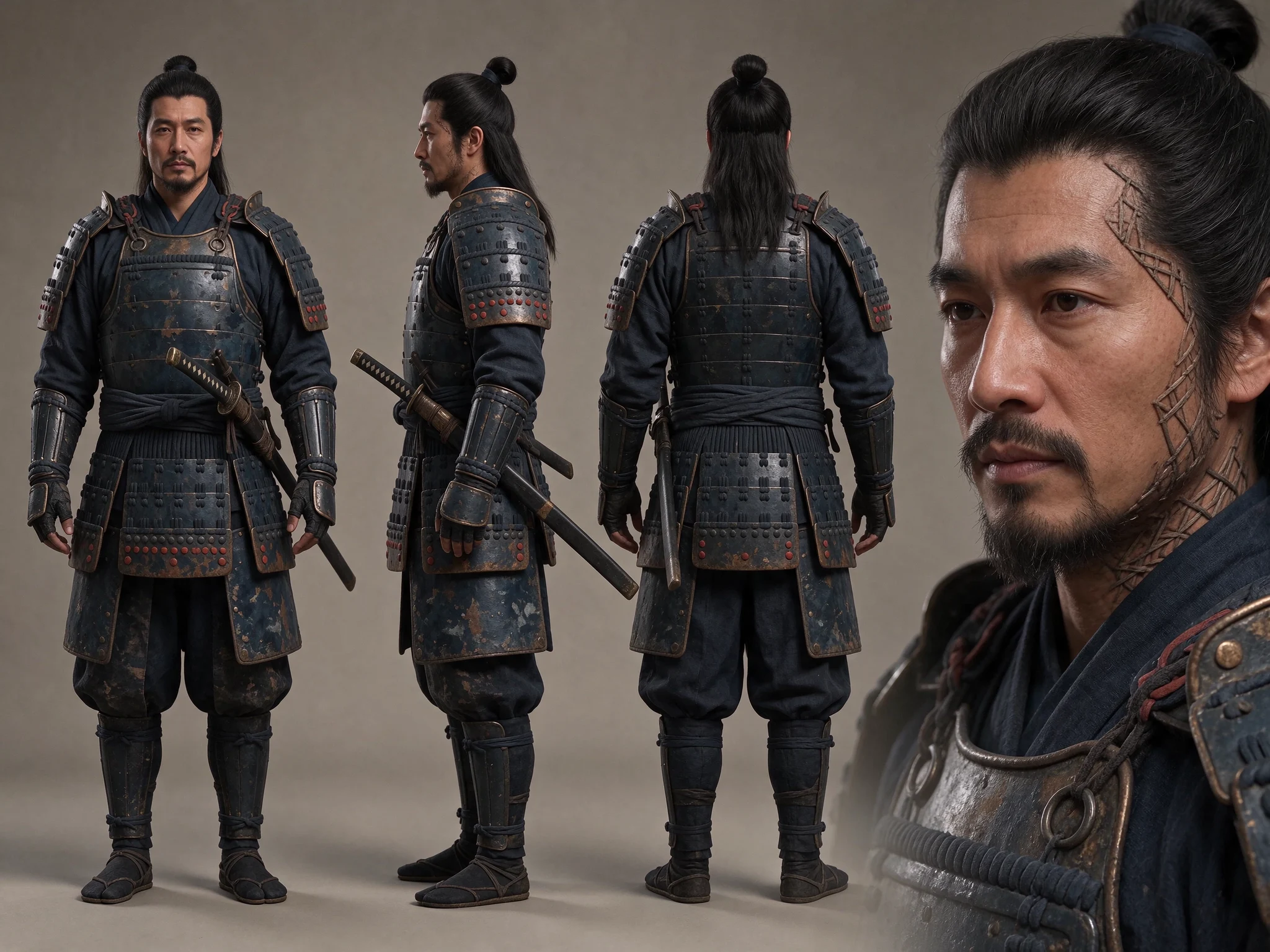
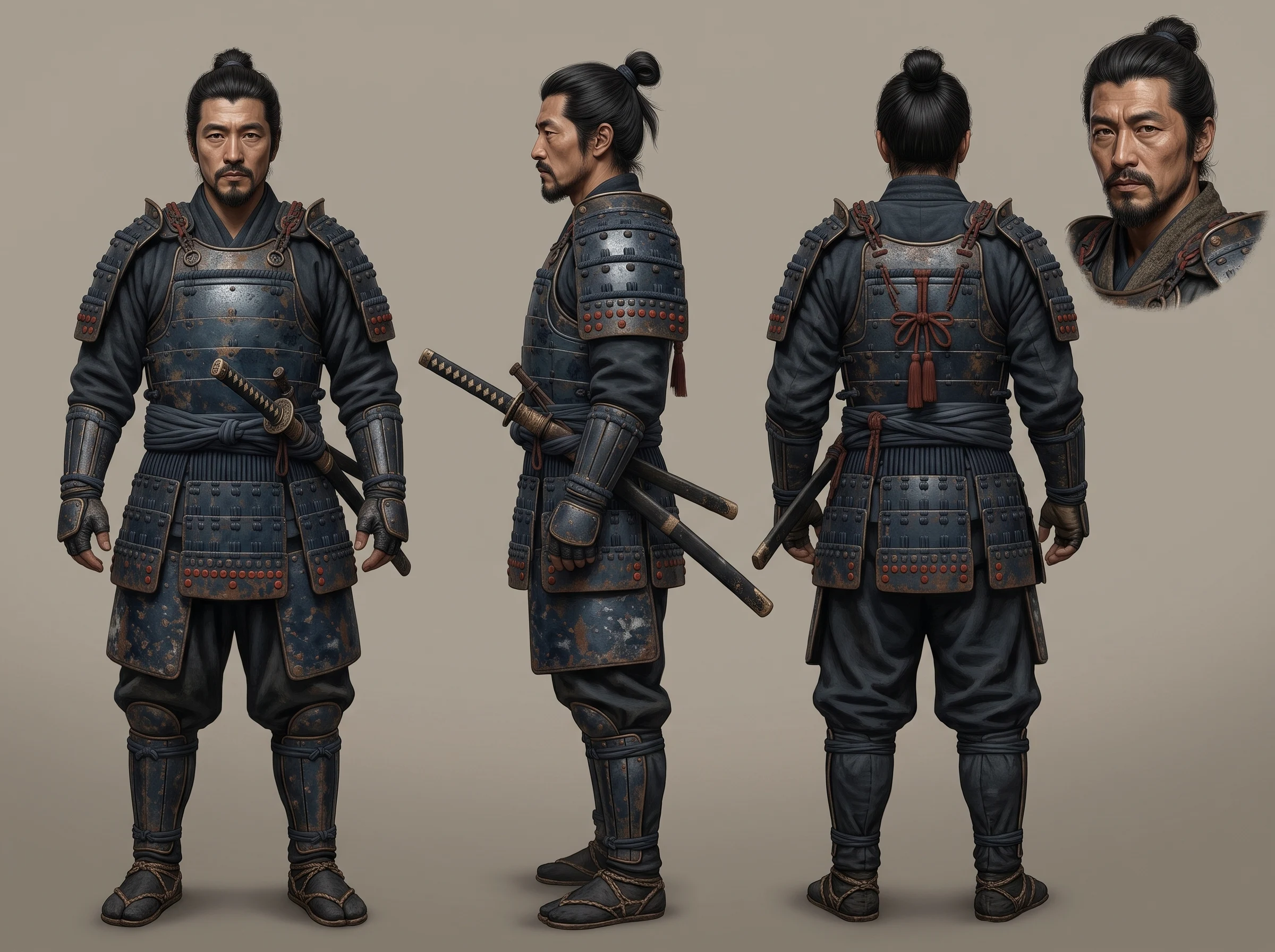
Same prompt. Same reference. Two actual Astra outputs.
Define what makes the character recognizable
Before comparing image models, decide which details cannot drift. For our original samurai, that meant the adult face, tied-back dark hair, dark indigo armor, muted red ties and the construction of the clothing. A new pose could change; those identity cues should remain recognizable.
A useful character sheet shows the same person from several viewpoints. Front, side and back views expose inconsistencies that a single dramatic portrait can hide. A close face study adds a different kind of evidence: expression, age and facial structure.
Keep the comparison controlled
We supplied the same original samurai reference and the same prompt to Seedream 5.5 and Nano Banana 2.1 through Astra. The request specified a clean landscape canvas, three full-body views at the same scale and a smaller three-quarter face portrait. This is a pair of actual generated examples, not a broad benchmark or proof that either model is always better.
For your own comparison, change one meaningful variable at a time. Record the reference, prompt and model so a result remains understandable after the first impression fades.
Look past the most attractive face
Compare the armor closures, sleeve shape, belt, footwear and silhouette across views. Check whether a side view is really a side view and whether the back describes the same outfit. Count hands and inspect the grip around any prop. A beautiful portrait does not compensate for a sheet that cannot explain the character consistently.
We also made an original anime ninja sheet with a dark layered outfit and pale scarf. The purpose was to explore a different visual language while retaining clear identity cues. Its figures and expression studies are fictional creative concepts.
Carry the selected direction forward
Choose the result that best supports the next scene. Keep it in the project or shared library and use the reference inputs supported by the next workflow. A character sheet is direction for a model, not a guarantee of identical results across every pose, medium or generation.
The Create image page includes the matched-prompt study. Review both outputs at full size, then decide what should remain fixed and what can evolve. For a video, a carefully composed scene image may be a more useful starting frame than a sheet with multiple views and panels.