The outcome: a plan you can inspect
Scheduled work should have a clear purpose, timing and expected result. Astra includes Calendar and AI Tasks views of shared events and tasks. This guide explains how to make that planning useful without assuming behavior that has not been verified for your account.
Exact recurrence options, execution behavior and delivery channels depend on the current configuration. Check those in your app before relying on unattended work. A calendar item alone is not proof that an AI operation will run.
Define the job before the timing
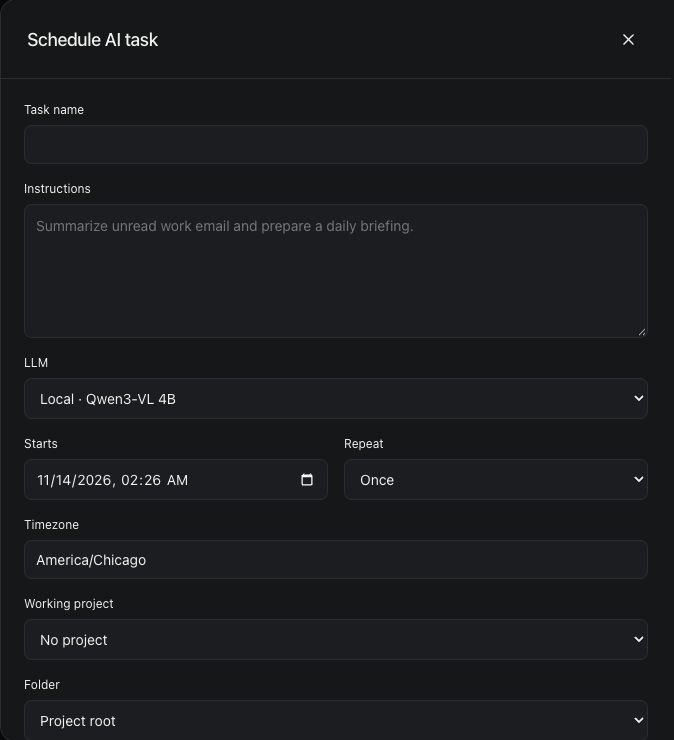
Write down the work, its source material and what a useful result looks like. “Review the client brief and list open decisions” is more inspectable than “handle the project.” Keep the requested result small enough to review.
This is example task language. It is not a saved schedule, a promise of automated execution or a job running in the background.
Review the same work from two views
Use Calendar to inspect events and tasks within the day’s commitments. Use AI Tasks for another view of those same items. Check the actual task and its details rather than creating duplicate entries just to make it visible in both places.
Confirm the date and timezone shown by your account. If timing controls or recurrence are available, inspect their saved values in the current interface. Do not infer a recurrence from a task name containing “daily.”
Check the agent and its context
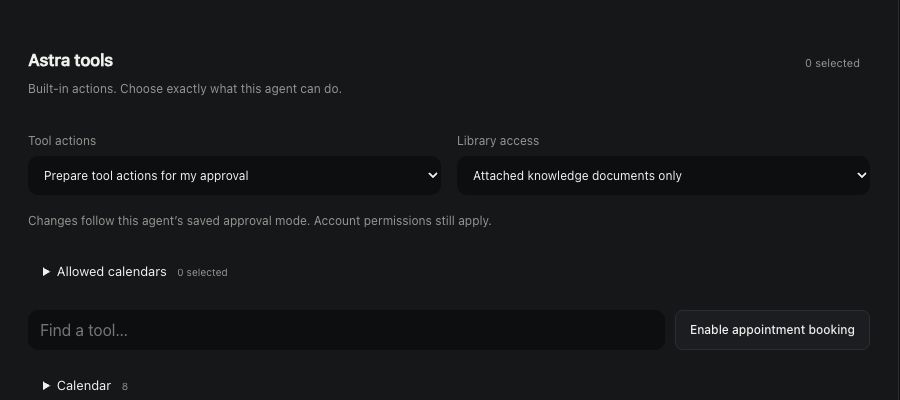
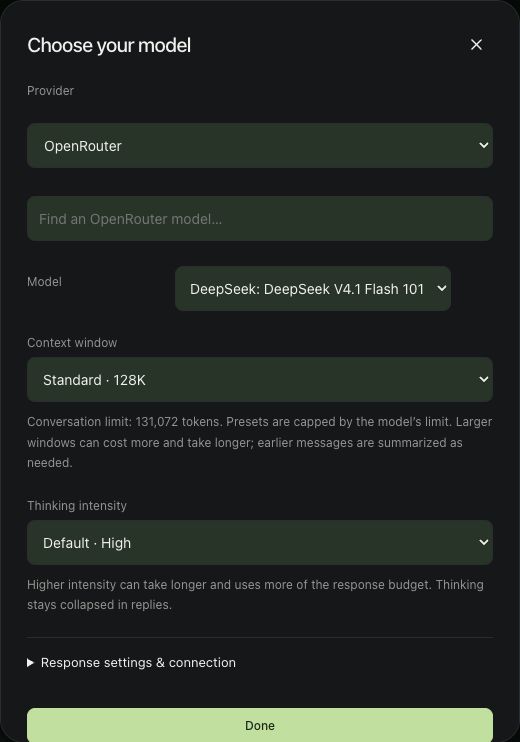
Confirm which agent or configuration, if any, is associated with the work. Review its allowed sources and operations. Task timing does not grant additional knowledge access or permission to send a message, book an appointment or modify a file.
If the job depends on a connected provider, verify that connection independently. A useful task description should explain what to do when a source is missing instead of asking the agent to guess.
Verify one complete run in your environment
Before relying on a schedule, perform an authorized, narrow test and check the actual result. Confirm whether execution occurs, when it occurs, where the output appears and how errors are shown. If those behaviors cannot be established, keep the task as planning context until they can.
Keep the result and the plan distinct. A completed review should contain the requested information; an event or task entry describes the intended work. Use the evidence from your test to decide what can run unattended.